



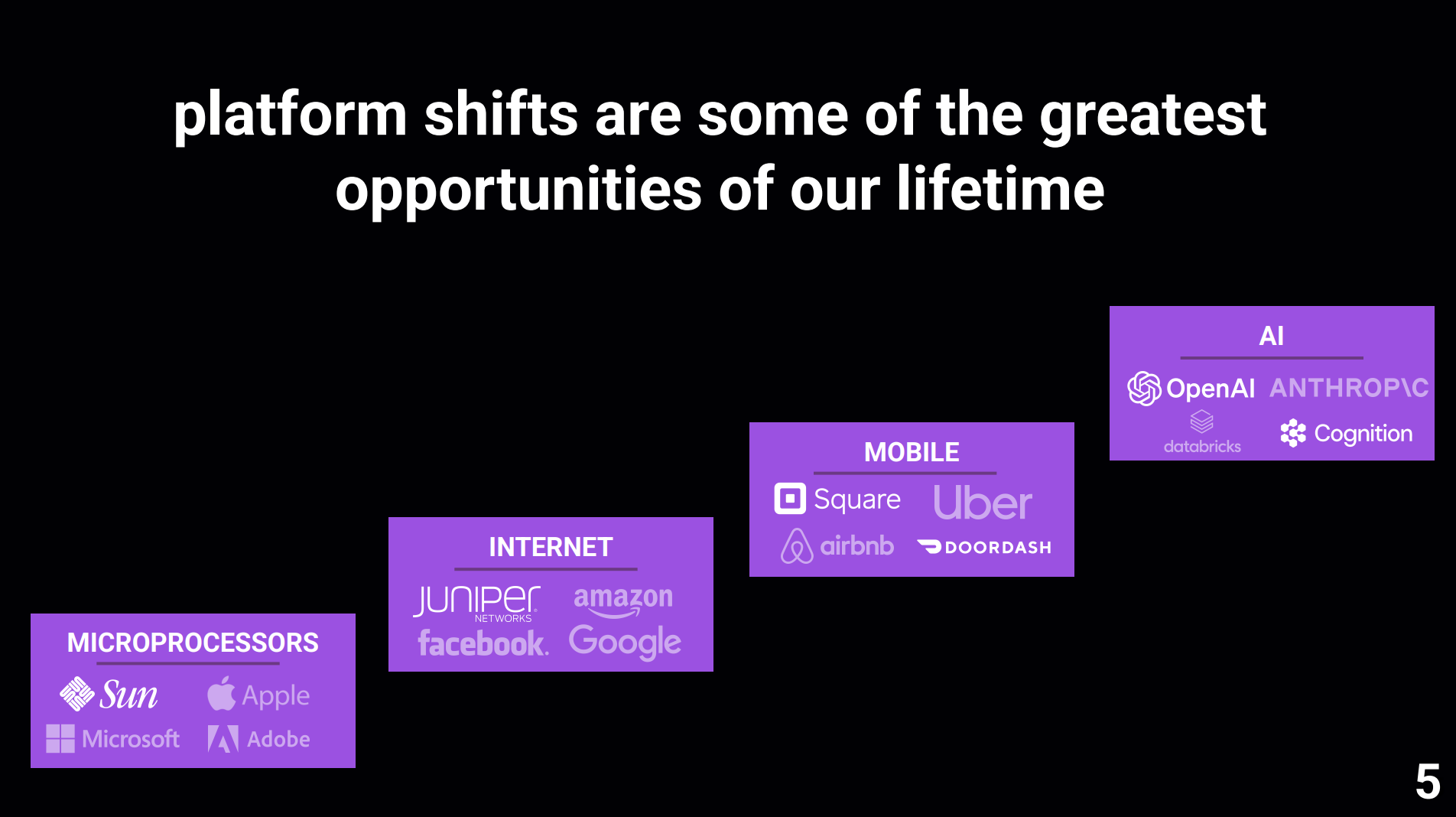
Vinod Khosla is not a recent convert to the transformative potential of Artificial Intelligence. As a co-founder of Sun Microsystems during the microprocessor boom and an early investor in the foundational technologies of the internet (such as Netscape and Juniper Networks), Khosla has spent four decades identifying and capitalizing on era-defining technological shifts. His perspective on AI is therefore not merely theoretical but grounded in a career spent at the inflection points of the digital age.
This analysis tracks the evolution of Khosla’s thesis on AI over a pivotal decade, from 2014 to 2024. It is a journey that moves from early economic warnings to urgent geopolitical priorities, culminating in a grand vision of a “post-scarcity” future. A post-scarcity world is one where technology makes essentials like energy, food, and expertise so cheap and abundant they are practically free. Khosla’s thinking has not been static; it has adapted significantly to accelerating technological capabilities and shifting global dynamics.
In 2014, he issued a warning shot, arguing that AI would drive unprecedented abundance alongside a massive gap between the rich and the poor. This challenged the widely accepted economic theories that technology always creates more jobs than it destroys. By 2017, his focus sharpened on an immediate threat: the weaponization of AI by adversarial nation-states (specifically China and Russia). He argued that the greatest danger was not sentient machines (conscious AI that can feel or perceive things), but losing the AI race.
His current thesis, articulated in 2024, synthesizes these concerns into a comprehensive worldview. Khosla argues that AI represents a “difference in kind” from previous technologies—multiplying the human brain much as engines multiplied muscle power. This potential for near-infinite brainpower necessitates an aggressive acceleration of AI development to secure a utopian future and ensure the prevalence of democratic values, while simultaneously demanding a radical rethinking of capitalism and social policy to manage the inevitable disruption.
The Khosla Doctrine on AI: Acceleration, Abundance, and Adaptation
The Utopian Goal: Achieving Post-Scarcity AI promises unparalleled abundance and a post-scarcity economy. However, achieving this utopia requires implementing radical policy interventions, such as Universal Basic Income (UBI) (an unconditional sum of money provided by the government to all citizens) and “empathetic capitalism” (Khosla’s term for a system focused on reducing disparity, not just profit), to manage massive job displacement.
The Evolution: From Disparity Concerns to Existential Risks Khosla’s thesis evolved from recognizing that AI fundamentally replaces human judgment (2014), to prioritizing the immediate threat of AI-driven cyberwarfare and geopolitical imbalance (2017), to advocating for aggressive acceleration as an existential necessity (2024).
The Geopolitical Necessity: Winning the AI Race While initially focused on general economic disparity, Khosla increasingly prioritized the existential threat of adversarial nations dominating AI. He argues that “slowing down the development of AI could be disastrous for democracies and the greatest risk we could possibly take.”
Defining the Shift: Why AI is Fundamentally Different
“Difference in Kind”: AI is not just another tool; it is the intellectual parallel to the steam engine, multiplying brainpower rather than just augmenting human labor.
“This Time Is Different”: The historical precedent that technology revolutions create new jobs may not hold true when technology surpasses human intelligence and judgment.
Deflationary Growth: A specific economic concept where prices fall (deflation) while well-being and consumption increase (growth). AI may drive down costs so significantly that traditional GDP (Gross Domestic Product) metrics may become distorted or even decline.
The 80/80 Prediction: Automating Expertise and Ending “Survival Servitude” A future where Khosla predicts “80% of 80% of all jobs” will be automated, expertise (doctors, tutors, engineers) is near-free globally, and humanity is liberated from “survival servitude” (being “enslaved” to the need to work just to survive) to redefine its purpose.
Note: Vinod uses the “80% of 80%” phrasing to make his prediction specific: he believes AI will impact the breadth of 80% of job categories, and will automate the depth of 80% of the work within those jobs, for a total of 64% of all work tasks.
Khosla Ventures: The Engine Room for “Reinventing Societal Infrastructure”
source: slides for AI: Dystopia or Utopia? (May 2025)
Khosla Ventures (KV), the venture capital firm founded by Vinod Khosla, is the platform from which these theses emerge and the vehicle through which they are actioned. The firm’s identity is rooted in backing disruptive innovations—technologies that completely change or overthrow existing industries—that promise significant societal impact. This spans information technology, sustainable energy, healthcare, and advanced materials. The firm is structured to take long-term, often high-risk bets on technologies capable of “reinventing societal infrastructure.”
Khosla’s background at Sun Microsystems and his history of investing in foundational technology platforms inform KV’s core philosophy: that profound technological shifts, while disruptive, are the primary drivers of human progress. The firm operates with a belief that the “possible” must be actively brought into existence. Khosla’s evolving AI thesis aligns directly with this mandate, viewing AI not just as a sector for investment, but as the defining technology of the next several decades, capable of reshaping every vertical the firm touches.
The “Technology Possibilist”: Khosla’s Philosophy and Motivations
Vinod Khosla operates as a strategist identifying macro-level transformations. His perspective is deeply informed by his engineering background and his experience navigating previous technological revolutions. He identifies as an “unapologetic capitalist” and a “technology possibilist”—someone animated by the “boundless potential of what could be.”
Khosla’s motivations appear twofold. First, a profound belief in technology’s potential to solve very difficult or (nearly) impossible human problems, such as providing free healthcare and education globally. He frequently cites the “bottom half of the planet”—the 4 billion people who stand to gain the most from AI-driven abundance, contrasting this potential with the “ivory tower” concerns of Western academics. Second, a pragmatic concern for the preservation of Western democratic values. He views the AI race with China as a battle for the future of global influence, arguing that the nation leading in AI will “anoint the world’s political system.”
His analytical approach is characterized by a willingness to challenge economic orthodoxy and anticipate sudden breaks from previous trends rather than predict the future by assuming existing trends will continue the past. He favors causality over correlation, frequently dismissing economists who rely on historical trends. As he quoted Karl Marx in 2014, “when the train of history hits a curve, the intellectuals fall off.”
Mapping the Journey: A Three-Stage Evolution
Vinod’s analysis of AI has evolved significantly over the past decade, adapting to the accelerating pace of technological development and the changing geopolitical landscape.
2014: The Economic Warning—“This Time Is Different”
Thesis: “The Next Technology Revolution Will Drive Abundance And Income Disparity”
Link to Source
The Argument: Devaluing Human Judgment Khosla argued that machine learning was rapidly progressing toward surpassing human judgment, decision-making capability, and potentially even creativity. This would dramatically increase productivity and economic abundance.
The Catalyst: Big Data and Complex Decisions The emergence of big data and progress in complex tasks previously thought impossible for computers (e.g., driving a car). Khosla noted examples in his portfolio aiming to replace functions ranging from farm workers to cardiologists and legal researchers.
The Significance: Challenging the Luddite Fallacy This essay was significant for its stark warning: “This time could be different.” Khosla challenged the “Luddite fallacy.” The Luddites were 19th-century workers who destroyed machinery, fearing it would take their jobs. The “fallacy,” according to mainstream economics, is the belief that technology destroys jobs; the orthodoxy holds that it always creates new ones. Khosla argued that historically, technology augmented human capability. But if machines become superior in intelligence and judgment, human labor will be fundamentally devalued. Education and retraining, he contended, would not be sufficient solutions for the majority (the bottom 80%) of the workforce.
2017: The Geopolitical Pivot—“Scary for the Right Reasons”
Thesis: “AI: Scary for the Right Reasons”
Link to Source
The Argument: The Immediate Threat of Weaponized AI Khosla shifted the focus from long-term economic disruption—which he estimated was still a decade or more away—to immediate national security threats. He argued that the public discourse (led by figures like Elon Musk and Stephen Hawking) was wrongly focused on dystopian “overlord AIs,” while ignoring the immediate danger: “AI in the hands of governments and/or bad actors used to push self-interested agendas.”
The Catalyst: Cyberwarfare and Authoritarian Investment The context included visible interference in political systems (Russian interference in the US election), large-scale cyber hacks (Equifax), and the aggressive, focused investment in AI by China and Russia for nationalistic advantage.
The Significance: Reframing the AI Arms Race Khosla highlighted the vulnerability of the West. He noted that the open publication policies of Western companies (Google, Facebook) and universities created a “one-way flow of technology.” Furthermore, he argued that authoritarian regimes held an advantage due to their disregard for data privacy. The AI race was reframed as an “economic war,” potentially worse than the nuclear arms race, necessitating immediate countermeasures.
2024: The Utopian Imperative—Acceleration as Survival
Thesis: “AI: Dystopia or Utopia?”
Link to Source, annual meeting talk, slides
The Argument: AI as Infinite Brainpower A grand synthesis arguing that AI is a “difference in kind,” multiplying the human brain itself. This promises a “post-scarcity economy” or “consumer utopia” where material limitations are eliminated and expertise is near-free.
The Catalyst: Advanced Capabilities and the “Doomer” Narrative The rapid advancements in AI capabilities (LLMs, robotics) and the rise of the “Doomer” narrative (the story that AI will lead to catastrophe or the end of humanity), which Khosla aggressively seeks to dispel and reframe.
The Significance: The Forced Choice and Empathetic Capitalism This stage integrates the economic warnings of 2014 and the geopolitical urgency of 2017. The core argument is that the risk of falling behind China far outweighs the risks of AI development (sentient or otherwise). Therefore, regulation that slows progress is the greatest danger. The solution to the 2014 disparity problem is now clearly defined: “empathetic capitalism,” UBI, and leveraging the massive abundance AI will create.
The 2024 Synthesis: A Blueprint for the Post-Scarcity World
Khosla’s 2024 thesis is a passionate argument for accelerating AI development as a moral and existential imperative, combining a utopian vision with pragmatic policy recommendations to navigate the transition.
The Intellectual Engine: Multiplying the Human Brain
The core concept is that AI is the intellectual parallel to the steam engine. Just as engines allowed humans to use external energy (coal, oil) to augment physical output, AI allows for a “near-infinite expansion of brain power.” This transcends human capacity, leading to a future where the vast majority of jobs can be done by AI, often better and more consistently. The ultimate goal is a post-scarcity society where work is a choice, not a necessity, potentially ushering in a 3-day workweek. This democratization of expertise promises near-free AI tutors and physicians globally.
The Forced Choice: The West vs. Authoritarian AI
Khosla directly addresses the dystopian views of “pessimists and doomers.” He argues their focus on the risks of sentient AI—while real—is misplaced, “myopic, alarmist, and actually harmful” because it ignores the far greater risk: losing the AI race to nefarious nation-states. He frames the situation as a forced choice: “Are you ready to trust Xi and his Putin-like appendages for the equitable distribution of one of the world’s most powerful technologies? That would be dystopian.” Slowing down, he argues, is not an option; the “cat is already out of the bag,” and technological leadership is an “existential priority worthy of wartime mobilization.”
Beyond GDP: The New Economics of Abundance
The nuance in Khosla’s argument lies in his vision for the new economy and the redefinition of human purpose. He anticipates “AI-led deflationary growth.” As the cost of labor and expertise approaches zero, the prices of goods and services will plummet. This could lead to a paradox where nominal GDP (GDP measured in current prices, without adjusting for inflation or deflation) decreases, but consumption and overall well-being increase dramatically. Traditional GDP measures, Khosla argues, will become a “distortion of prosperity.”
Furthermore, AI offers the chance to liberate humans from “survival servitude.” He argues that the dystopian narrative is “cognitively lazy” and often comes from those insulated from existential pressures. By eliminating the need to work for survival, AI could increase our “humanness,” allowing people to pursue passions, creativity, and exploration.
The Dual Strategy: Acceleration Meets Adaptation
Khosla’s thesis translates into a dual strategy:
Technological Acceleration: Aggressive investment in AI development across all sectors (healthcare, education, resource discovery, bipedal robotics). This includes investment in AI safety research, but vehemently opposes premature regulation that would slow progress relative to China.
Socio-Economic Adaptation: Acknowledging that the transition over the next 10-25 years will be “very messy” due to the speed of change (much faster than the agrarian revolution), Khosla advocates for structural changes to capitalism. Recognizing that “Western capitalism is by permission of democracy,” he calls for prioritizing income disparity reduction alongside efficiency (”empathetic capitalism”) and implementing UBI funded by AI-driven abundance.
The Strategic Playbook: Navigating the Transition

source: slides for AI: Dystopia or Utopia? (May 2025)
Vinod Khosla’s decade-long analysis of AI forms a coherent strategic playbook that has evolved from cautionary observation to urgent advocacy. The arc of his thinking reflects a consistent belief that AI is a fundamentally different technology that will disrupt the foundations of labor and economics.
What has changed is the prioritization of threats and the clarity of the solutions. In 2014, the threat was abstract economic disparity and the solution was a tentative call for structural change. By 2017, the threat was concrete—geopolitical imbalance and cyberwarfare. In 2024, the threat is the potential loss of a utopian future and the failure of democratic values, and the solution is an aggressive combination of technological acceleration and radical policy adaptation.
The overall trajectory is a movement from what the economic impact will be (disparity), to who the adversaries are (China/Russia), to how we must manage the transition to achieve the utopian outcome. Khosla’s evolution demonstrates that navigating the AI revolution requires not only aggressive technological advancement but an equally aggressive willingness to reshape the socio-economic foundations of society, ensuring that the transition to a post-scarcity world is guided by deliberate, democratic choices rather than fear or inaction.
More from Uncovered Media

